
YELLOW #4
Just do it!
How to successfully automate grinding processes – with a self-assessment for your business!
The machine is running, sparks are flying. An employee is using an angle grinder, workpiece by workpiece. It’s noisy, dusty – and it takes time. Meanwhile, the pile of components still needing finishing is growing. A colleague is absent, and a replacement is hard to find.
Does this sound familiar? In many workplaces, this is exactly what everyday life looks like. And often, at some point, the same question arises: does all this really still have to be done by hand?
Container for the scroll indicator
(Will be hidden in the published article)
When the process is always the same – but takes a long time
Grinding, in particular, involves many repetitive steps. Component by component, always the same movement, the same result – ideally, at least. This is precisely where automation comes in.
What used to be economically viable only in large-scale production now works for smaller batch sizes too. Robotic grinding has evolved – both technically and economically.
A look at real-world applications
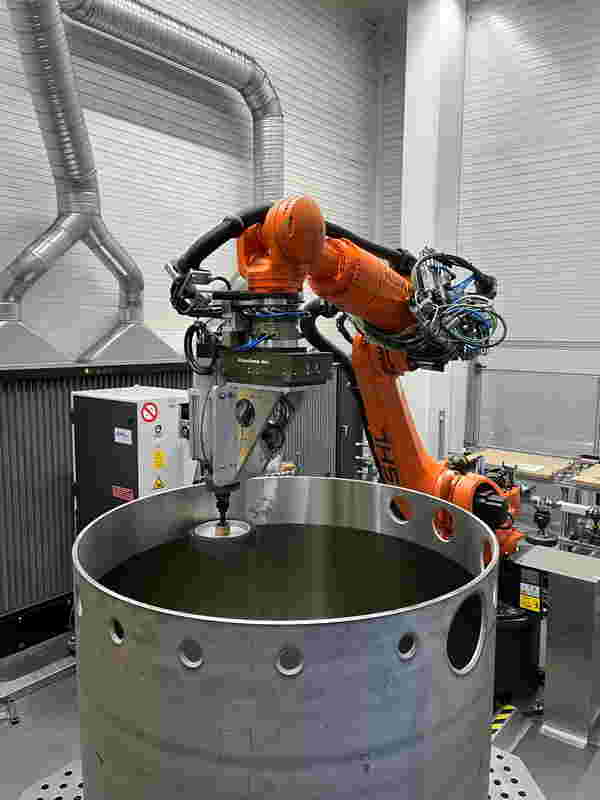
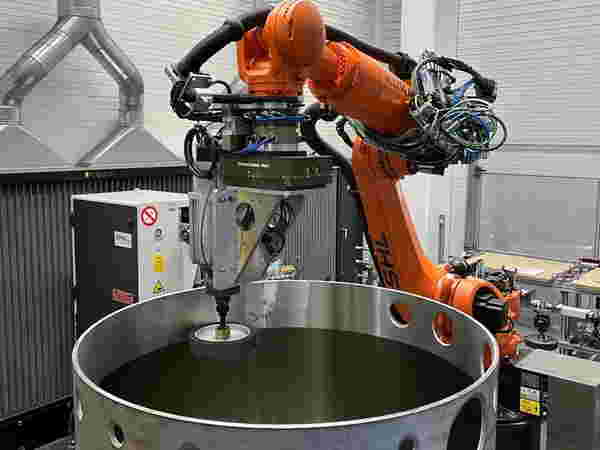
Möstl Anlagenbau GmbH is very familiar with this situation. The company manufactures plant for the pharmaceutical and food industries – with clearly defined surface requirements.
When grinding stainless steel tanks, every detail counts. Today, robots take on a large part of this work. The result: consistent quality combined with more efficient processes.

A quick self-assessment
It is often quicker than you might think to determine whether automation is worthwhile.
Three questions can help with an initial assessment:
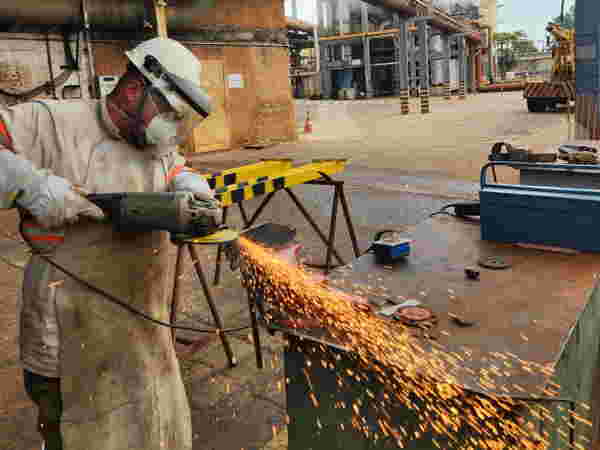
Are you short of skilled staff for the grinding process?
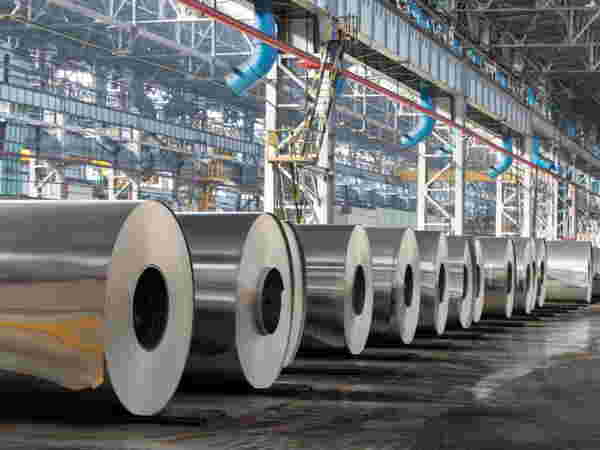
Do you work with series-produced or recurring components?
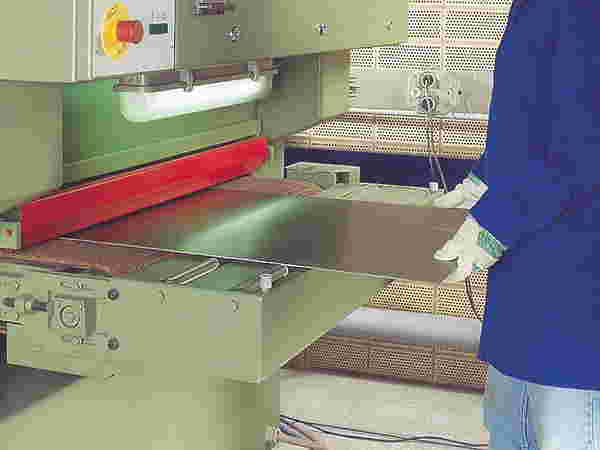
Are there any grinding or polishing processes that always follow the same sequence?

What really matters: setting the right priorities
In practice, it quickly becomes apparent that not everything can be maximised at the same time. High material removal, a perfect surface finish and maximum tool life are often at odds with one another. That is why the key question is: what is truly crucial for your process? Only once these priorities are clear can the right solution be developed.
Standard solution or bespoke?
Many applications can already be covered by existing abrasives. In other cases, specific adjustments are made.
Typical factors to consider:
- Grit type and grit size
- Bond and distribution
- Base material and coating
Particularly in automated applications, it is crucial that the abrasive performs reliably under consistent conditions.
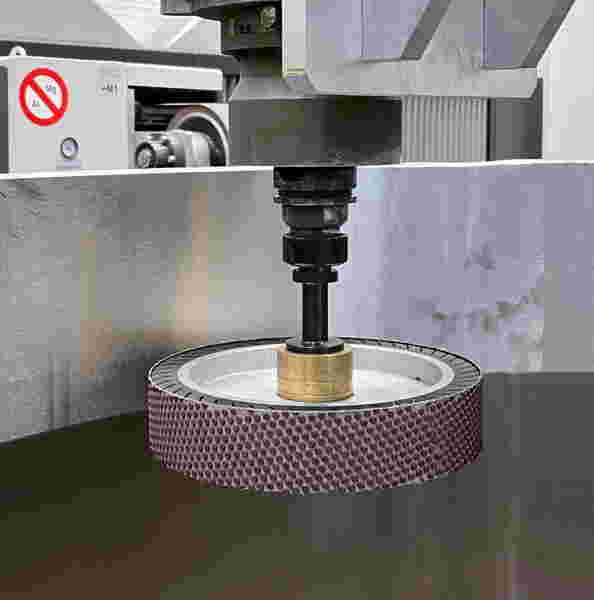
When everything fits together
Robotic systems operate at a constant pressure and over long periods of time. This places particular demands on the tools used. When the abrasive and the machine are optimally matched, a stable process is achieved – and this is precisely where the real advantage of automation lies.
What you gain in concrete terms
- Consistent surface quality
- Reproducible results
- Shorter cycle times
- Reduced material consumption
- Reduced workload for your staff
- Improved health and safety
Bringing automation to life
The best way to see what automated sanding looks like in practice is to experience it first-hand. At the ‘Automated Sanding’ seminar at the Klingspor Training Academy in Haiger, typical applications will be demonstrated and specific solutions presented. It’s a great opportunity to get a feel for what’s possible today – and which solutions are right for your own business.
Conclusion
You may be familiar with the situation: repetitive sanding processes, mounting pressure, a shortage of skilled workers. Automation is no longer a vision of the future – for many businesses, it is already a viable solution. The first step is often the simplest: taking a closer look at your own process. And then deciding whether it isn’t time to take the next step.
Container for the dynamic page
(Will be hidden in the published article)
Container for the dynamic page
(Will be hidden in the published article)