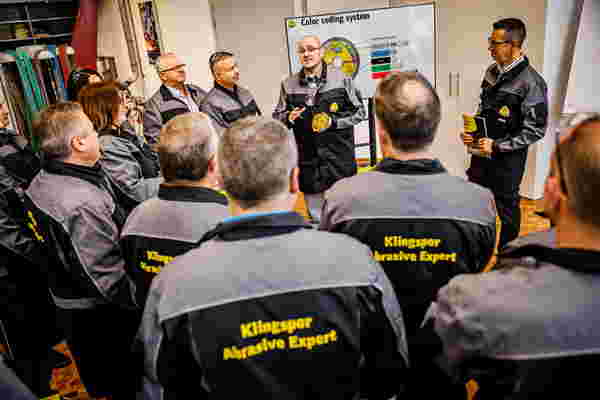
There are as many grinding myths as there are grains on a grinding sheet. Some are only slightly off the mark, others are hair-raising and, in the worst case, dangerous. Some have persisted for decades. That's why Kevin Scholz, head of the Klingspor Training Academy, is finally dispelling some of the most widespread grinding myths.
Container for the scroll indicator
(Will be hidden in the published article)
Myth #1
Skipping grit sizes saves time
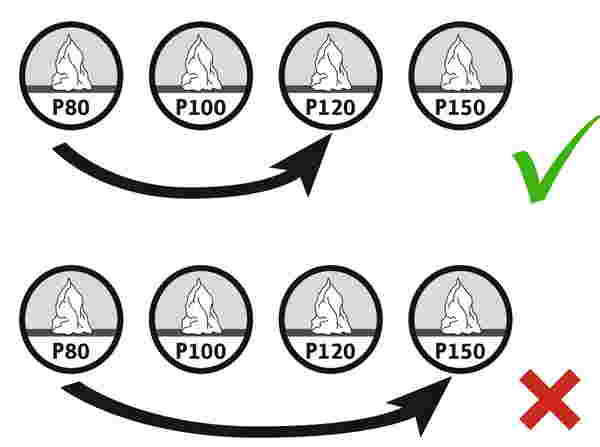
Anyone who has ever done any sanding knows that you start with a coarse grain size. Depending on the application, coarse sanding is done with a 40, 60 or 80 grain size. The path to fine grinding with 220 to 400 grit or even polishing with over 400 grit is long and requires many grinding passes with increasingly finer grit. "Sometimes it's tempting to skip one or two grit sizes to save time," says Kevin Scholz, Head of the Klingspor Training Academy. And he immediately shakes his head: "But that's not a good idea. Such a jump can lead to deep grooves in the surface that are almost impossible to remove."
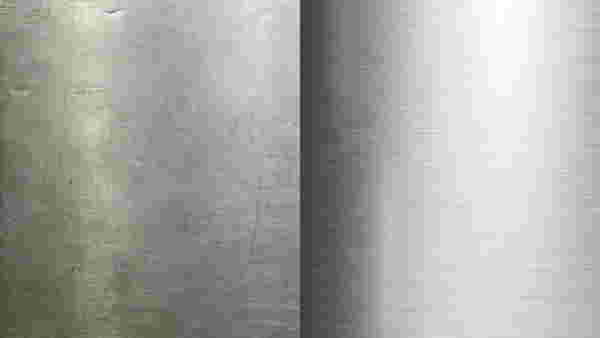
This is because when you skip a grit size, for example from 80 to 240, the basic structure of the material remains unchanged. The 240 grit only sands down the peaks, but does not reach the existing valleys. The result is a rough, wavy and uneven surface structure.
The truth: intermediate steps improve the surface
"Work in small intermediate steps, slowly becoming finer. Then the surface will also become finer and more even," recommends Scholz. This is particularly important when working with wood and visible parts made of metal and stainless steel. However, there is no rule of thumb for the steps in which the grain should be refined. Instead, experience and a great deal of tact are required.
Myth #2
More pressure means faster grinding
This is by far the most common myth heard by employees on the Klingspor hotline. "Of course, higher contact pressure initially results in greater removal. But this can quickly backfire and cause reworking, which then negates the time saved earlier," explains Kevin Scholz.
Excessive contact pressure can trigger a chain reaction: as the pressure increases, so does the risk of the abrasive overheating. Overheating leads to faster clogging and thus a shorter service life. In addition, higher pressure also changes the surface: it becomes more uneven and its roughness increases.
The truth: the process must be viewed holistically
Contact pressure is just one of many factors that can be adjusted during grinding. "To find out which pressure is best in each individual case, you have to look at the entire grinding process and coordinate all the parameters," advises Scholz.
"Many grinding myths have been around for years – regardless of experience or application."
Kevin Scholz Head of the Klingspor Training Academy
Myth #3
"P" indicates the grit density
Abrasives feature many numbers and letters that specify their characteristics. Almost always included is the letter "P": P60 or P120, for example. "There is a persistent assumption that this 'P' indicates how densely the grain is scattered," says Kevin Scholz. "So that P60 means that 60 abrasive grains are placed on a certain area of the sanding belt. Or, in the case of P120, 120 abrasive grains."
The truth: "P" indicates the grain size
"P" has nothing to do with the density of the grit, but indicates the grain size according to the FEPA standard. The FEPA (European Federation of Producers of Abrasives) specifies the size of the abrasive grain for Europe. The rule is: the finer the grain size, the higher the "P" number.
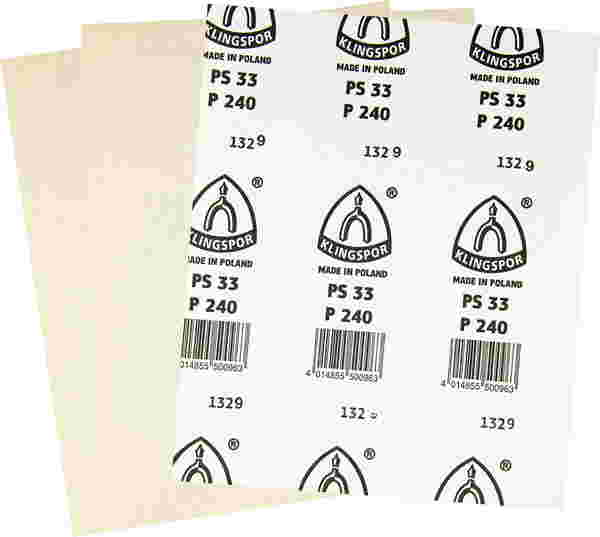
A glance at the back or packaging of the abrasive provides information about the grain size. It is important to note that the FEPA standard is not the only standard for specifying grain size. "For users, this means that if they want to compare abrasives, they must first check whether the information is based on the same standard." This is because abrasives are only comparable if the grain size is specified with the same identifier, for example "P".
Incidentally, the dispersion density is not specified with a specific number. Klingspor has open, semi-open and dense dispersion abrasives in its range. You can find out which dispersion density offers which advantages in Klingspor's abrasive knowledge section.
The colour of the abrasive belt indicates the grain type
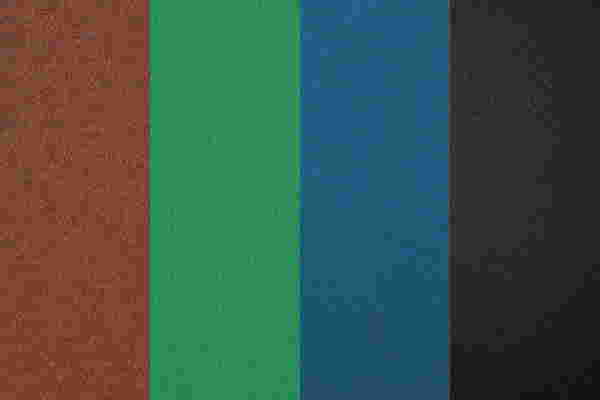
No! The colour of an abrasive belt does not indicate the type of grain. "You cannot assume that a blue abrasive belt from Klingspor is a zirconia alumina belt. This is often the case, but not always," explains Kevin Scholz from the Klingspor Academy.
The truth: the top coat determines the colour
The colour of an abrasive belt is primarily determined by the top coat, i.e. the final layer of material applied to the belt. It usually covers the colours of the lower layers. The same colour does not necessarily mean the same grain size – but rather the same top coat.
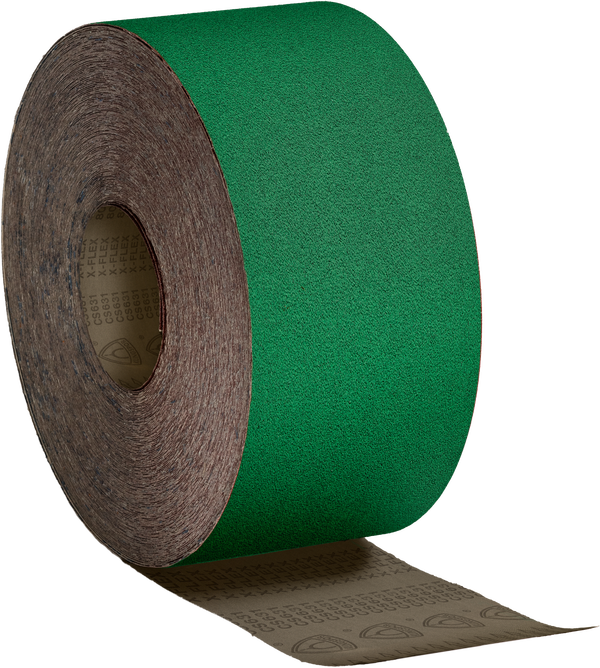
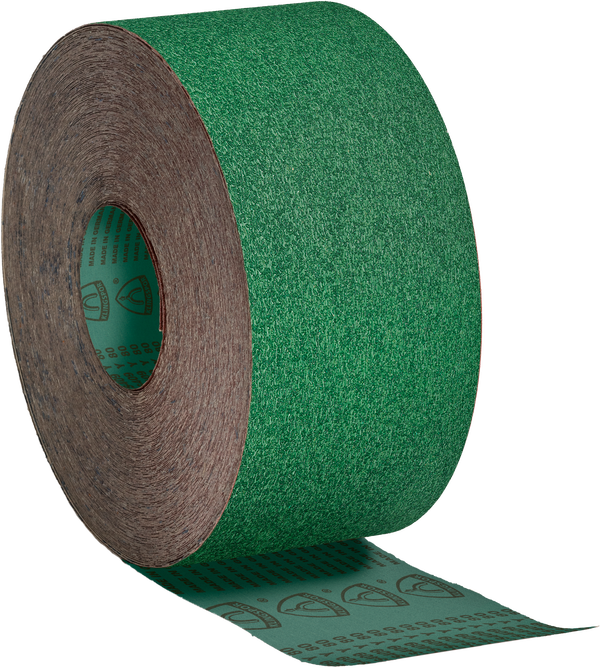
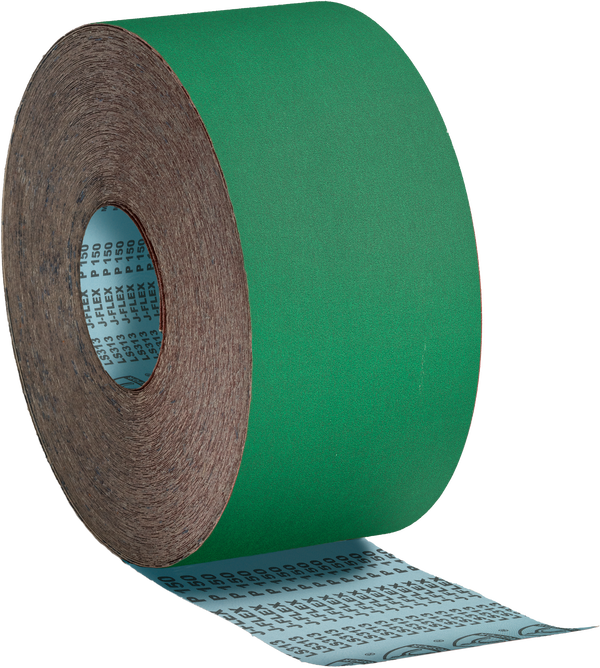
Let's take an example: Klingspor has various green abrasive belts in its range. They get their colour from the multi-bond that they all have. This additional coating ensures particularly cool grinding, increases removal rate and service life, and reduces tarnishing when grinding stainless steel. However, the grain types in green abrasive belts vary greatly, as three examples show:
If it costs a lot, it must be better. That's not necessarily true when it comes to grinding, explains Kevin Scholz, Head of the Klingspor Academy: "The price of the abrasive is not the decisive factor for successful grinding. The grinding process is influenced by many different parameters that determine the performance of an abrasive."
The truth: the abrasive must be suitable for the process
In order to achieve optimum grinding results, it is important to select the right abrasive for the grinding process. Among other things, the material, the machine used and the desired surface finish must be taken into account. Sometimes it turns out that the most expensive abrasive is not the best for a particular task: "It may be that a very high-quality ceramic abrasive cannot perform to its full potential on a weak machine. In this case, switching to a less expensive product with zirconia or corundum can achieve the same result at a lower cost," says Scholz.
If you are unsure which abrasive is best suited to your grinding task, you can contact the abrasive specialists at Klingspor. The Abrasive Experts provide advice and actively work with you to optimise grinding processes – naturally with a view to achieving the best price-performance ratio. The experts also pass on their knowledge at the Klingspor Training Academy. Whether for metal, wood or building materials, the Training Academy offers a suitable programme for every area of application.
Discover the Klingspor Training Academy and the abrasive experts:
Want to sharpen your knowledge?
The Klingspor Training Academy – a place where customers become real fans. Discover the fascinating world of grinding, cutting and drilling now!